
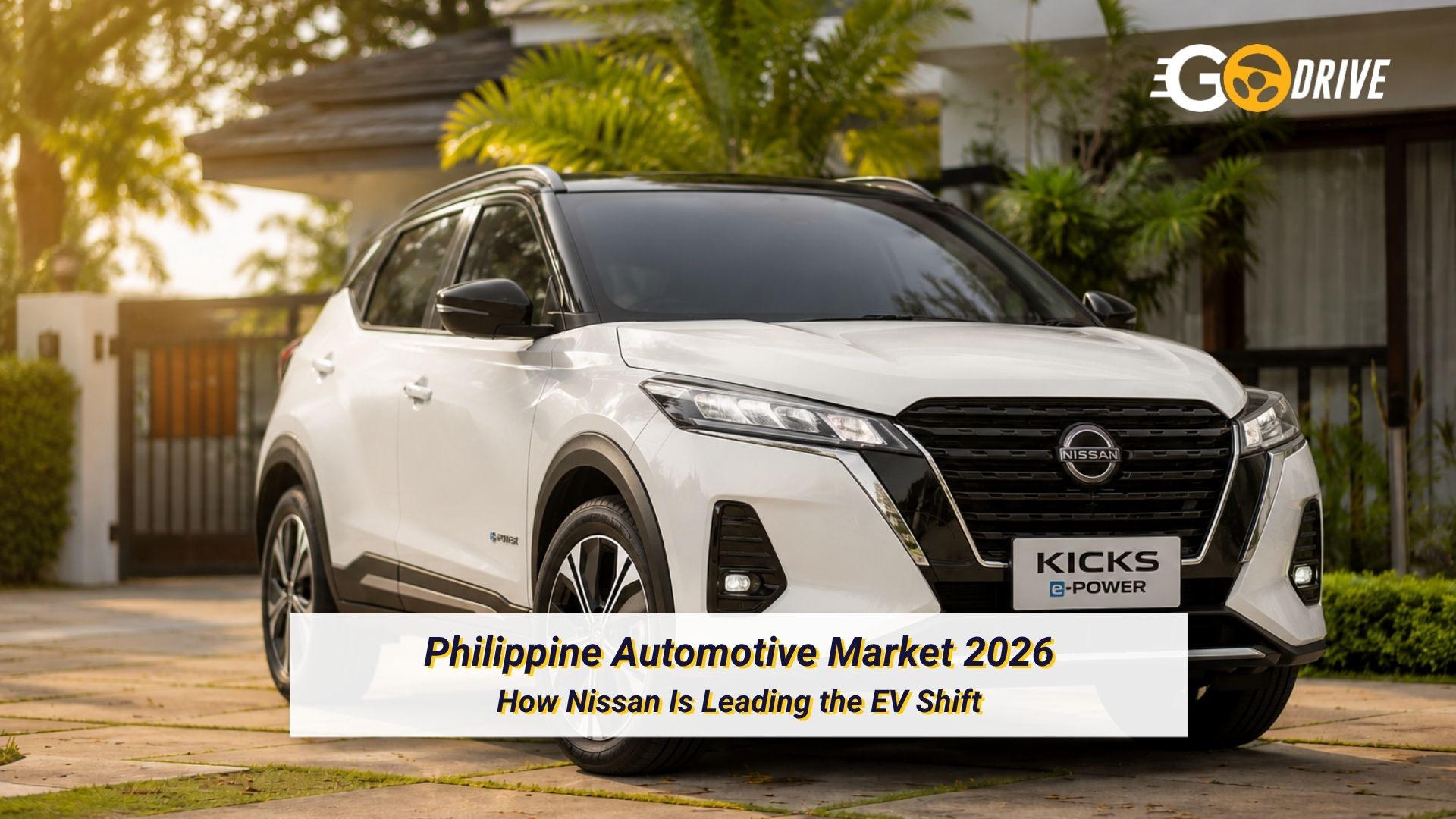
Walk into any family garage in the Philippines and there’s a good chance you’ll find the same thing: a tall, seven-seater SUV built to handle both city traffic and weekend road trips. Whether it’s for school runs, family outings, or long drives to the province, SUVs have become the vehicle of choice for many Filipino households.
That preference hasn’t changed.
What is changing, however, is what powers those vehicles.
According to Emmanuel San Luis of Nissan Philippines, Filipino consumers are becoming more open to electrified mobility: a shift that is gradually reshaping the country’s automotive landscape.
Why Are More Filipinos Considering EVs?
For decades, the Philippine market was dominated by gasoline and diesel-powered vehicles. Compared to many neighboring ASEAN countries, Filipino consumers were often more cautious when it came to adopting new automotive technologies.
San Luis believes that mindset is rooted in practicality.
“My experience in the past is that normally, when there’s a new technology introduced within the ASEAN neighborhood, we are always probably the last to adopt,” he said. “Because culturally, we would like to be comfortable with the technology first, the reliability before we change.”
Today, however, signs of change are becoming increasingly visible.
Rising fuel costs, growing awareness of sustainability, and the arrival of new electrified vehicle options have encouraged more consumers to explore alternatives to traditional internal combustion engine (ICE) vehicles.
“With the oil crisis and with all the Chinese brands coming in, we’ve seen a big adoption and accelerated adoption of Philippine consumers on electrified models,” San Luis explained.
The shift may still be in its early stages, but industry leaders are seeing momentum build as consumers become more familiar with electric vehicle technology.
How Is Nissan Responding to the EV Transition?
Nissan has been investing in electrified mobility long before EVs became a mainstream topic in the Philippines.
The company introduced the Nissan LEAF, one of the country’s earliest fully electric vehicles, and later expanded its lineup with the Nissan Kicks e-Power, a model that combines electric driving characteristics with the convenience of traditional refueling.
As consumer demand continues to evolve, Nissan is preparing to introduce even more electrified options.
“We’re going to introduce four electrified models at the Philippine International Motor Show,” San Luis revealed. “All of those models are really aligned with what the market needs and what the market wants at this point.”
The company’s strategy is not to replace traditional vehicles overnight but to give customers more choices as they transition toward electrification.
“We’ll continue to cater to traditional buyers who would like to go with an ICE engine,” San Luis said. “But this time, we’re also offering them a diverse EV lineup, from PHEV to BEV.”
Why Do SUVs Continue to Dominate the Philippine Market?
Despite the growing interest in electrification, one thing remains certain: Filipinos still love SUVs.
When asked which vehicle segment is likely to remain strongest in the years ahead, San Luis answered without hesitation.
“Still, the SUV segment,” he said. “Because Filipinos love that design: that seven-seater, off-road-y design.”
The appeal is easy to understand.
SUVs provide the passenger space needed by growing families, the ground clearance required for varying road conditions, and the flexibility to handle both urban commutes and out-of-town adventures. For many buyers, they represent practicality, comfort, and value in a single package.
As automakers continue to develop electrified SUVs and crossovers, these two trends are expected to converge, creating vehicles that combine familiar functionality with modern technology.
What Does the Future Hold for Filipino Car Buyers?
According to San Luis, the next generation of consumers is already showing greater openness to alternative powertrains.
“What we’re seeing is that Filipinos are catching up,” he said. “And probably the next generation of buyers are also evolving at this stage.”
For Nissan, the Philippines remains one of the brand’s most important markets in the ASEAN region. Backed by a strong dealer network and loyal partners, the company continues to invest in products and technologies that meet the changing needs of Filipino motorists.
The future of the Philippine automotive market may not be a choice between SUVs and EVs.
Instead, it may be defined by both.
Filipinos still want the space, versatility, and confidence that SUVs provide. At the same time, they are becoming more willing to embrace new technologies that offer greater efficiency and sustainability.
As the industry evolves, one thing is becoming increasingly clear: the road ahead belongs to vehicles that combine the best of both worlds.
Emmanuel San Luis is a senior executive at Nissan Philippines. Statements in this article are sourced from an exclusive interview conducted by Global Dominion Financing, Inc. ahead of the Philippine International Motor Show 2026. Produced by Global Dominion Financing, Inc.