In a recent TikTok interview with Aian Guanzon of Global Dominion Financing, Inc., Thomas Mathai, Founder and CEO of Carbay, provided a candid look at the current Philippine automotive landscape. He shared three core observations regarding how the market is evolving for both dealers and buyers.

@gdfiofficial

KaPartnerInterviews: “I think some of the prominent Japanese brands are playing it fairly sensibly with the hybrid models that they introduce, which kind of caters to both segments, and gives the customer […] benefits that one could get through electrification in any case in terms of incentivization.” – Thomas Mathai, CarDekho Philippines – Used Car Finance CEO PwedePala KaPartnerMoSaPagAngat — Global Dominion Financing, Inc. is regulated by the Securities and Exchange Commission (SEC). For inquiries or concerns email info@gdfi.ph, text/call 09178272742 or 09688744068, or visit gdfi.com.ph. Global Dominion does not collect application fees. Study the loan Terms and Conditions in the disclosure statement before proceeding with any loan transaction. The views and opinions of the people in this video do not reflect the views of the company. Furthermore, the interviewees and any brands mentioned are not necessarily associated with the Global Dominion. The SEC may be contacted via phone (8-818-5990, 02-5322-7696, 0929-626-3095) or email (cgfd_flcd@sec.gov.ph, flcd_complaints@sec.gov.ph).

♬ original sound – Global Dominion Financing Inc. – Global Dominion Financing Inc.

1. Brand Loyalty Persists, But Preferences Are Evolving

While Filipino car buyers remain inherently loyal to Japanese nameplates, the specific types of vehicles they prioritize are shifting. Mathai noted that while brands like Toyota and Mitsubishi continue to dominate the consumer mindset, buyers are moving toward models that offer higher utility.

“Historically, Filipinos have been more brand conscious in terms of the types of vehicles or brands they prefer. The Japanese brands have predominantly dominated the market—the likes of Toyota, Mitsubishi, and others.”

MPVs and SUVs are gaining significant ground in the used car segment as Filipino consumers look for the flexibility and road presence needed for both personal and business use. As we discussed in our guide on car affordability in 2026, this shift toward functional, multi-purpose vehicles reflects a broader need for adaptability on the road.

2. Electric Vehicle Growth Is Structural, Not Temporary

Mathai argues that the rise of electric vehicles (EVs) in the Philippines is a long-term change in buyer behavior rather than a reaction to temporary fuel price spikes.

“Month on month, if you look at initial reports, 2025 data suggests there’s been significant growth in electric vehicle sales if you compare year on year—2024 versus 2025 versus Q1 of 2026. I don’t think that’s all solely attributable to the Middle East war.”

While after-sales support and repairability for imported EV units remain challenges, Mathai believes these are solvable hurdles as the market matures. His verdict remains clear: electrification is here to stay.

3. During Uncertainty, Focus on the Dealer

For Carbay, navigating market turbulence requires returning to the fundamentals: prioritizing the used car dealer as the core customer.

“Our core mantra was always focus on the used car dealer as a customer. Whenever there’s any kind of turbulence or uncertainty in the market, where we recenter our focus again is on the used car dealer as your main customer.”

This focus is driving the adoption of practical digital tools, such as digitized financing applications and API integrations with partners like Global Dominion. By providing real-time visibility into loan statuses, these tools allow dealers to close deals faster and provide customers with a seamless experience.

Posted on

3 Market Trends: Insights from Carbay’s Thomas Mathai

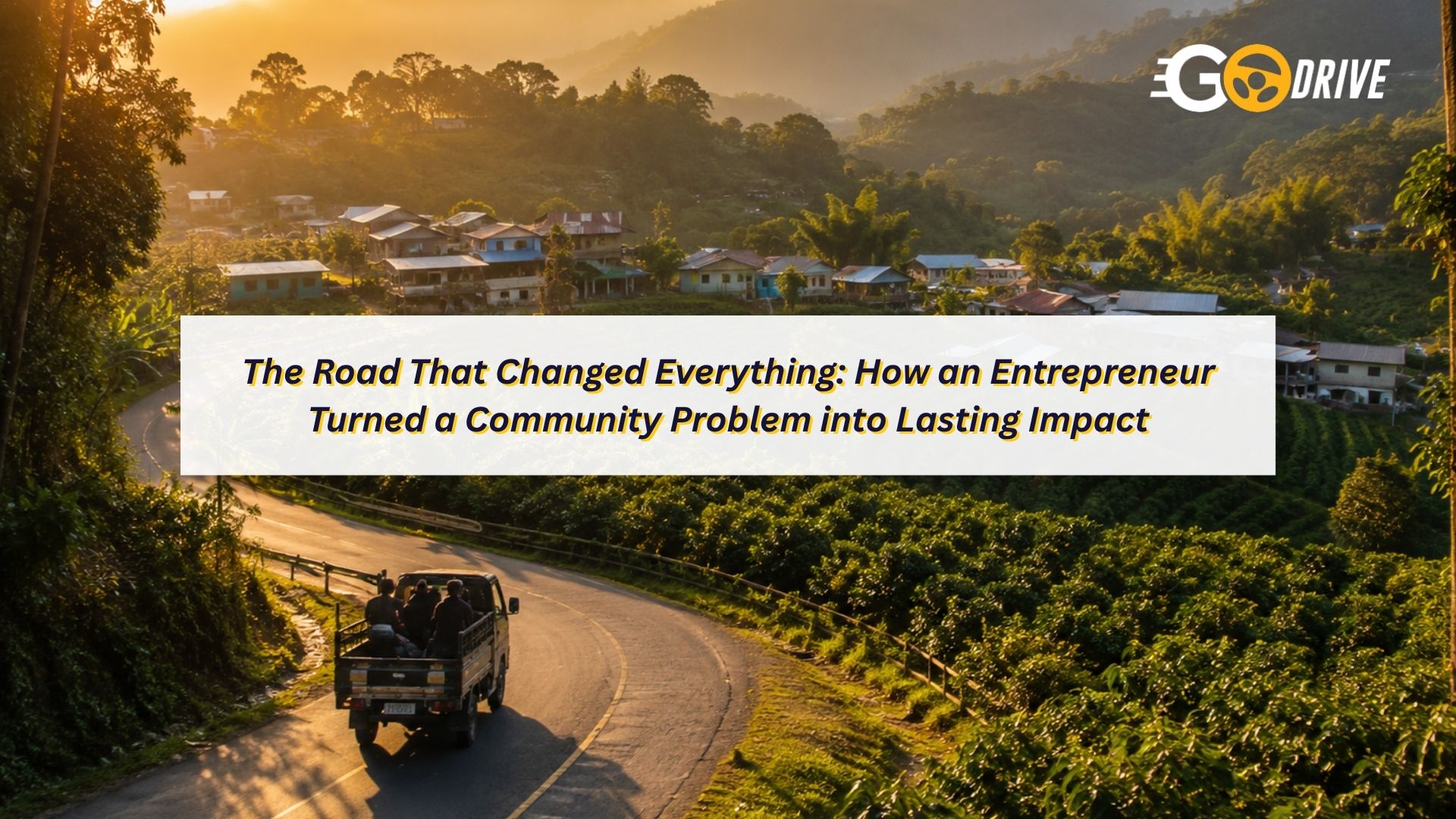
Behind every successful entrepreneur is a journey shaped by persistence, learning, and a willingness to take risks. For Ariestelo Asilo, that journey began long before he became involved in coffee, community development, and business expansion.

Early Foundations of Resourcefulness

From a young age, Asilo was already exposed to the world of selling. He started helping his mother, a sweepstakes ticket vendor, and later sold various items in school. Although he may not have realized it at the time, these early experiences shaped his future as an entrepreneur. The resourcefulness and initiative he developed early on became the foundation for the successful ventures he would later build.

From Rural Banking to Social Impact

Asilo’s career eventually led him to rural banking in Lobo, Batangas. Motivated by a desire to help farmers gain access to financial services, he worked closely with farming communities and gained firsthand insight into the unique challenges they faced.

During his visits, he noticed that coffee farmers were struggling to bring their harvests to market. Poor road conditions and difficult transportation routes often resulted in unsold harvests and lost income. Rather than accepting the situation, Asilo searched for ways to create a lasting solution.

This experience led to the creation of “Mind Map,” his first business venture. Through a developed feasibility plan, a proposal was presented to the World Bank and successfully secured funding for infrastructure development. The project resulted in the construction of roads that continue to benefit thousands of families today by providing better access to markets.

This initiative created opportunities on both sides: farmers gained better access to customers and income, while Asilo gained a deeper understanding of the coffee industry and the communities behind it. What started as an effort to solve a local problem eventually became the foundation for the growth of his own coffee business—a journey we have explored in our previous feature on his success with Varacco.

Advice for Aspiring Entrepreneurs

One lesson remained constant throughout his journey: the importance of learning from others. When asked what advice he would give aspiring entrepreneurs, Asilo emphasized the value of asking questions and seeking guidance from those with more experience.

“Ang ginawa ko, nagtatanong ako talaga. Yung mga marurunong, yung mga maalam, yung mga tingin ko ay mga wais na at may experience, nagtatanong ako. Hindi ako nahihiyang magtanong.”

For Asilo, asking questions was a way to make informed decisions and continue learning as an entrepreneur.

Growth Through Bold Action

Looking back, he believes that fear could have easily prevented many of the opportunities that came his way.

“And looking back, parang kung natakot kami noon, di ba? I mean, hindi magiging expansive yung operations, not only with the shops, but also with the farming community.”

His reflection highlights a lesson that has guided much of his journey: growth often comes from being willing to act despite uncertainty. By addressing a challenge faced by farmers, Asilo not only helped create opportunities for communities but also laid the groundwork for the growth of his own business.

His story is a reminder that success is not only measured by what a business achieves, but also by the impact it creates for others along the way.

Posted on

The Road That Changed Everything: How One Entrepreneur Turned a Community Problem into Lasting Impact

Owning a vehicle is a major milestone for many Filipinos. A personal car or truck provides day-to-day convenience for employee commutes, family trips, business logistics, and everyday travel. However, before navigating the showroom floor, you must secure approval for your car financing plan.

The good news is that the approval timeline can be shortened significantly if you prepare properly. By understanding the specific metrics lenders evaluate and organizing your records in advance, you can position yourself for a fast, hassle-free credit release.

Understand How Car Financing Works

Car financing allows you to acquire a vehicle through fixed monthly installment payments instead of exhausting your cash reserves upfront.

When you submit an application, financing companies examine your true financial capacity. The underwriting team specifically evaluates your net monthly income, current employment or business stability, existing monthly expenses, and overall credit history.

If your cash flows are steady and your application files are complete, the entire verification process moves much faster. Knowing these operational baselines helps you audit your own finances before a lender reviews them.

Strategic Factors to Consider Before Applying

Before initiating a car loan application, you must verify that the long-term amortization fits comfortably within your business or personal cash flow.

Calculate Your Safe Amortization Rate

Start by determining an absolute ceiling for your monthly payments. Financial planners generally recommend keeping total vehicle obligations under 20% to 30% of your net monthly income to prevent operational cash flow strain.

Maximize Your Down Payment

Your down payment is a critical lever for credit approval. Aiming for a 20% to 30% down payment rather than the absolute minimum drastically lowers the lender’s risk profile. On a P1,000,000 vehicle, putting down P200,000 instead of a minimal promo rate reduces your principal loan balance immediately. This directly results in faster approval turnarounds and lower long-term interest costs.

Pre-Assemble Local Documentary Requirements

Missing or unreadable documents are the primary cause of processing delays. You can bypass corporate bottlenecks by compiling an updated, digital folder containing these exact localized requirements:

  • Primary Government IDs: Two valid, government-issued identifications, preferably a passport, driver’s license, or PRC card.
  • Proof of Operational Income: Your latest three months of payslips or formal business financial statements.
  • Proof of Active Billing: An original utility bill (such as Meralco, Maynilad, or a post-paid telecom statement) showing your permanent residential address.
  • Banking History: Complete bank statements covering the last three to six months to prove cash flow depth.
  • Corporate Credentials: For entrepreneurs, your active Department of Trade and Industry (DTI) sole proprietorship registration or SEC corporate certificates.

How to Optimize Your Credit Standing

Lenders utilize your credit history to evaluate risk. If you utilize credit cards, personal lines of credit, or corporate capital loans, underwriting teams will verify whether you settle those balances on time. A consistent, clean repayment history builds trust and accelerates final loan sign-offs.

You can actively improve your local credit standing through a few practical habits:

  • Pay all credit card balances and existing utility bills before or on the exact due date.
  • Avoid applying for multiple loans simultaneously across different institutions, as this triggers hard credit inquiries that signal financial distress.
  • Maintain a steady source of income or keep your business bank accounts consistently active.
  • Keep your financial files organized and settle outstanding past-due balances immediately.

Even first-time auto loan borrowers can secure swift approvals by demonstrating these responsible, organized cash habits.

Drive Home Sooner with GoDrive

Securing car financing does not have to involve complex bureaucracy. Partnering with a dedicated automotive financial advisor makes the entire acquisition process direct, transparent, and convenient.

GoDrive supports aspiring vehicle owners by providing highly flexible financing solutions, end-to-end application assistance, and clear structural guidance throughout your vehicle purchase journey. For more automotive buying guides, vehicle updates, and strategic financing tips, follow GoDrive on social media to access targeted deals designed to get you on the road faster.

Posted on

How to Get Approved Faster for Car Financing in the Philippines

For many Filipinos, owning a vehicle remains a major life milestone because it offers personal comfort, scheduling convenience, and freedom from stressful daily commutes. However, in 2026, the intersection of rising fuel prices, higher vehicle manufacturing costs, and increasing living expenses has made car ownership more challenging than ever before.

Buying a vehicle is no longer just about meeting the upfront down payment; it requires comprehensive, long-term financial planning to ensure the asset does not overwhelm your monthly cash flow.

The Primary Cost Pressures of 2026

Navigating the modern automotive landscape requires a clear-eyed look at ongoing operational expenses.

Fuel Volatility and Rising Overhead

The continuous increase in fuel prices serves as one of the biggest challenges for motorists today. Daily drivers now spend a larger portion of their take-home pay at the pump, making overall transportation costs significantly heavier for working families and corporate professionals.

Because of this pressure, an increasing number of buyers are prioritizing fuel-efficient models, hybrids, and electric vehicles to protect their margins in the long run. If you find your current running costs climbing, reviewing practical adjustments like correcting bad driving habits that drain your fuel tank can help maximize your weekly mileage[cite: 8].

Higher Vehicle Acquisition Costs

Simultaneously, brand-new cars have become more expensive due to persistent inflation and elevated manufacturing costs. For the vast majority of Filipinos, purchasing a vehicle entirely in cash is unrealistic, making car financing the most viable path to ownership.

However, monthly amortizations today are also higher compared to previous years, driven upward by adjusting interest rates and institutional charges.

The Real Cost of Ownership Checklist

Before applying for automotive financing, prospective buyers must look past the monthly auto loan payment and calculate the total cost of keeping a vehicle on Philippine roads:

  • Monthly Amortization: The base cost of your auto loan installment.
  • Fuel Expenses: Weekly fuel consumption based on your regular routes.
  • Parking Fees: Monthly workplace parking slots and commercial parking fees.
  • Toll Fees: Regular expressway costs (such as SLEX, NLEX, or Skyway) if commuting across cities.
  • Maintenance and Repairs: Routine preventive maintenance service (PMS) and unexpected mechanical repairs.
  • Insurance Renewals: Annual comprehensive car insurance premiums.
  • Registration Costs: Yearly Land Transportation Office (LTO) registration renewals and emissions testing fees.

Why Private Vehicles Remain Necessary

Despite these intensifying financial challenges, demand for private vehicles remains robust because public transportation infrastructure remains difficult in many metropolitan areas.

Long commuter lines, overcrowding at transit hubs, and unreliable transportation schedules continue to push Filipinos toward private vehicles as a necessary measure for personal safety, health, and time management.

To balance this need for mobility with tight budgets, a growing segment of buyers is shifting toward the pre-owned market. High-quality secondhand vehicles provide a practical alternative, as they typically feature lower down payment requirements and more manageable monthly amortizations.

Is Car Ownership Still Worth It for You?

The answer ultimately depends on your unique financial situation and specific lifestyle parameters.

A private vehicle remains a highly justifiable investment if:

  1. You travel daily for essential work assignments or business logistics.
  2. Your residential or office location has limited access to public transport networks.
  3. You require safe, flexible, and emergency-ready transportation for your family.
  4. You can comfortably absorb the secondary monthly expenses without straining your savings.

If a new vehicle loan stretches your debt-to-income ratio too thin, the acquisition will likely cause more financial stress than everyday convenience.

Smarter financial planning is the definitive key to vehicle ownership in 2026. To access budget-friendly car options, practical financing tips, and the latest automotive updates in the Philippines, follow GoDrive on social media to build a sustainable path to your next vehicle.

Posted on

Can Filipinos Still Afford to Own a Car in 2026?

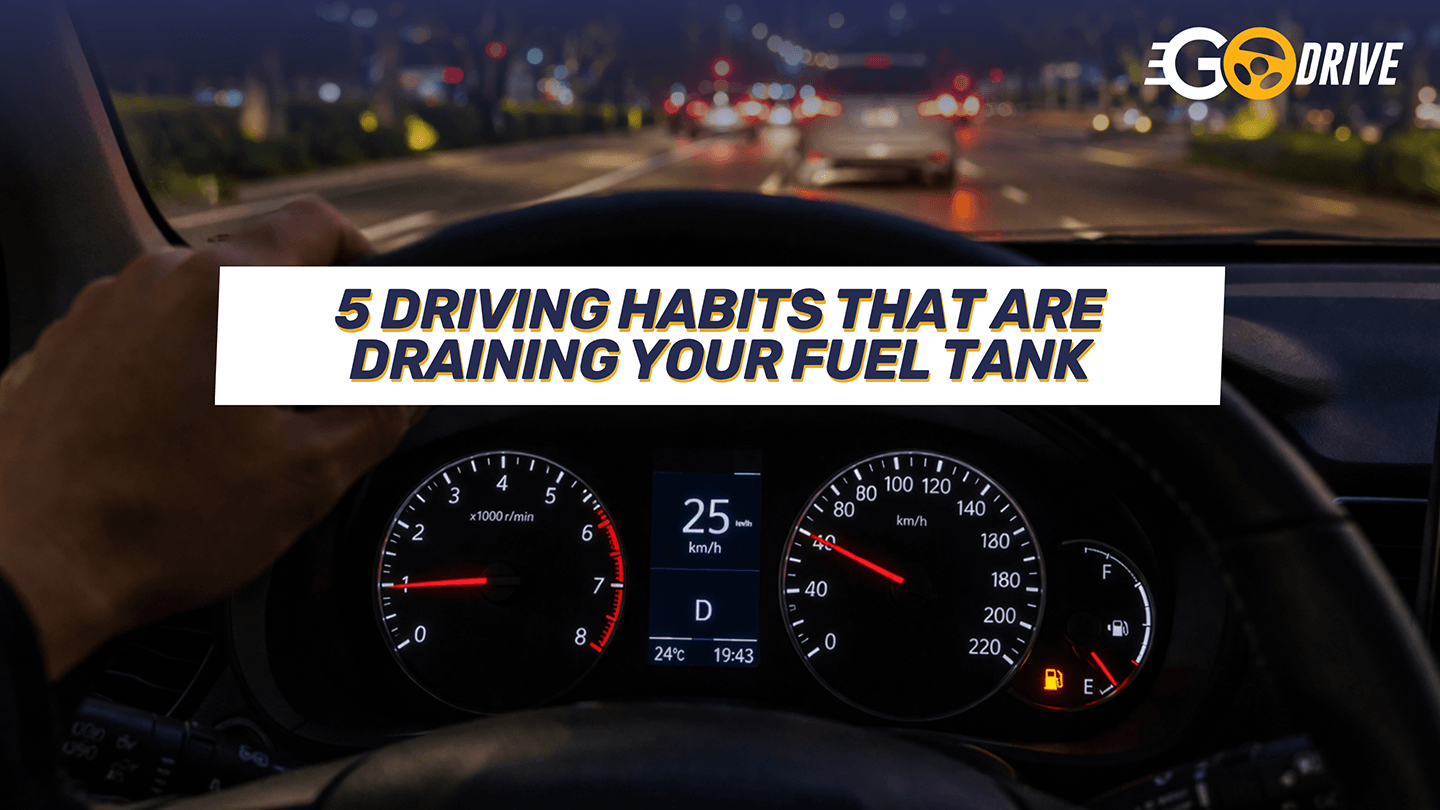
Fuel prices in the Philippines continue to experience significant volatility, with diesel and gasoline reaching exceptionally high levels in various provinces. These constant price hikes put immense pressure on everyday drivers, particularly commuters and logistics entrepreneurs who rely on their units for daily operations.

In this economic environment, maximizing your mileage is essential. The way you operate your vehicle has a direct correlation to your total fuel consumption. While certain daily driving habits may seem harmless, they can quietly drain your fuel tank and increase your monthly overhead over time.

By identifying these five common habits, you can take immediate control of your fuel expenses.

The Financial Cost of Aggressive Driving

Aggressive handling forces your engine to work outside its optimal efficiency range, rapidly burning through your fuel reserves.

1. Sudden Acceleration

Pressing hard on the gas pedal when launching from a red light or overtaking sharply uses significantly more fuel than necessary. This practice forces the engine to run at high RPMs and increases fuel consumption, especially during heavy stop-and-go traffic on roads like EDSA or C5.

To counter this, practice gradual acceleration. Easing into the throttle gently allows your transmission to shift smoothly, keeping fuel usage under control.

2. Hard Braking

Frequent hard braking is usually a sign of tailgating or failing to anticipate the flow of traffic ahead. Every time you slam on the brakes unnecessarily, you lose momentum, forcing you to accelerate hard once again to regain speed.

Maintain a safe three-second following distance from the vehicle ahead. By looking further down the road, you can ease off the accelerator early when you see traffic slowing down, allowing engine braking to slow the vehicle naturally instead of stomping on the brakes at the last moment.

Operational Losses from Inefficiency

How you manage your vehicle during stops and high-speed transit determines your overall fuel economy.

3. Idle Losses

Your vehicle continues to consume fuel even when it is stationary. Leaving the engine running while waiting in a pickup zone or parking slot wastes substantial amounts of fuel without generating mileage.

An idling engine can consume between 0.5 to 1 liter of fuel per hour depending on your vehicle’s engine displacement and air conditioning load. If you expect your stop to last for more than one minute, turn off your engine completely. This simple mechanical habit eliminates unnecessary fuel waste instantly.

4. High-Speed Dominance

Driving at excessive speeds increases air resistance significantly. Pushing your vehicle past 90 km/h on open expressways like NLEX, SLEX, or Skyway Stage 3 causes aerodynamic drag to spike, forcing the engine to consume up to 15% more fuel to maintain momentum.

Stick to a steady, moderate speed within the standard 60 km/h to 80 km/h efficiency sweet spot whenever expressway traffic laws allow. This balance optimizes your fuel-to-distance ratio and results in a much smoother drive.

Managing Vehicle Weight

The physical load of your car or truck directly impacts the amount of energy required to move it forward.

5. Carrying Dead Weight

Every extra 50 kilograms of unnecessary weight in your vehicle can reduce your fuel economy by roughly 1% to 2%. A heavy cabin forces your engine to work harder during acceleration, leading to higher fuel consumption.

Conduct a weekly audit of your trunk and cabin. Remove heavy items, unused sports gear, or unnecessary tools that you do not need for your daily commute. Keeping your vehicle light improves overall engine performance and increases your kilometers-per-liter average.

Drive Smarter with GoDrive

Fuel efficiency is not solely determined by the mechanical specifications of your vehicle; it depends heavily on your daily habits behind the wheel. Minor changes in how you accelerate, brake, and manage your trips can create substantial savings over the course of a year.

For more practical fuel-saving techniques, vehicle maintenance guides, and automotive updates, follow GoDrive on social media. Access our latest optimization tips designed to help you lower your running costs and maximize your vehicle investment.

Posted on

Five Driving Habits That Are Draining Your Fuel Tank